
Science
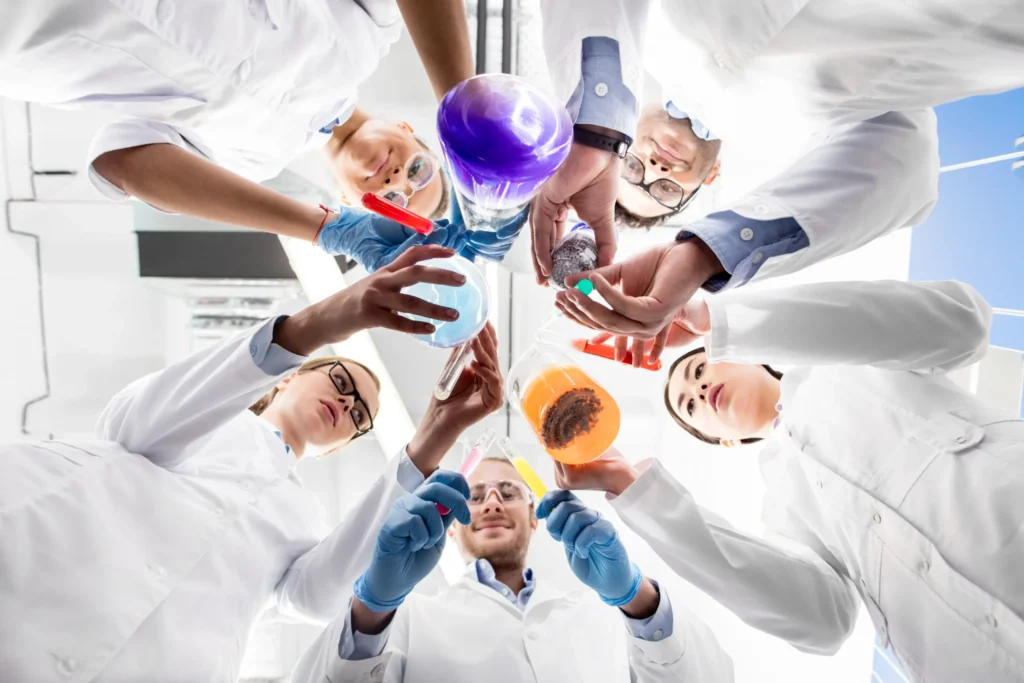
Science plays a central role in achieving sustainable development and improving the well-being of people around the world. It provides the knowledge, tools, and technologies needed to understand complex global challenges, make informed decisions, and develop solutions for issues like poverty, climate change, energy, health, and food security. Recognizing this, the United Nations has consistently emphasized the importance of science-based decision-making and the integration of scientific knowledge into global and national development strategies. Science supports evidence-based policies, enabling governments, organizations, and communities to plan, act, and monitor progress toward achieving sustainable development goals effectively.
The 2030 Agenda for Sustainable Development highlights the Technology Facilitation Mechanism (TFM), which was established by the Addis Ababa Action Agenda to support the Sustainable Development Goals (SDGs). Paragraph 70 of the Agenda specifies that this mechanism operates through multi-stakeholder collaboration, bringing together Member States, civil society, the private sector, the scientific community, United Nations entities, and other stakeholders. The TFM is composed of three main elements: a United Nations Interagency Task Team on Science, Technology, and Innovation for the SDGs, a collaborative Multistakeholder Forum on Science, Technology, and Innovation for the SDGs, and an online platform. Together, these components aim to enhance global cooperation, share scientific knowledge, and strengthen the capacity of countries to apply science and technology in addressing development challenges.
Sustainable Development Goals Targets 17.6 and 17.8 specifically emphasize the role of science, technology, and innovation in promoting development. Target 17.6 calls for enhanced cooperation on science and technology across regions, sharing knowledge on mutually agreed terms, and improving coordination among existing mechanisms, especially at the United Nations level. Target 17.8 aims to fully operationalize the technology bank and capacity-building mechanism for least developed countries, with a focus on enabling technologies such as information and communications technology. These targets show that science and technology are essential tools for enabling countries, especially the most vulnerable, to overcome development challenges and achieve sustainable progress.
The connection between science and sustainable development has a long history. Before the 2030 Agenda, the Rio+20 outcome document, The Future We Want, called for a Global Sustainable Development Report to bring together scattered scientific information and strengthen the interface between science and policy at the High-Level Political Forum on sustainable development (HLPF). In response, the United Nations produced a Prototype Global Sustainable Development Report in 2014. This report provided an in-depth analysis of trends, lessons learned, best practices, and emerging challenges, and aimed to facilitate dialogue between scientists and policymakers. By assessing progress across sectors like energy, water, land, and climate, the report offered guidance on priorities, investment needs, and technological solutions to support sustainable development.
Science for sustainable development has also been highlighted in numerous UN conferences and sessions over the past decades. The World Summit on Sustainable Development (WSSD) in 2002, the Commission on Sustainable Development (CSD) sessions in 1995, 1997, and 1998, and the United Nations General Assembly Special Session in 1997 all stressed the importance of scientific knowledge in policymaking. The WSSD Plan of Implementation underlined integrating scientists’ advice into decision-making bodies, improving collaboration between natural and social scientists, forming strategic partnerships between scientific, public, and private institutions, and making use of interdisciplinary approaches to assess risks and opportunities. It also encouraged the beneficial use of local and indigenous knowledge, demonstrating that science is not only about formal research but also includes traditional and local expertise.
Chapter 35 of Agenda 21 is entirely devoted to science for sustainable development. It calls for strengthening the scientific basis for managing natural resources, enhancing scientific understanding, improving long-term scientific assessments, and building scientific capacity in countries around the world. These objectives aim to ensure that nations can make informed choices about economic development, environmental protection, and social progress. Access to reliable data, satellite and ground-based observations, statistical services, and integrated information systems are all important tools for policymakers to assess trends, forecast future risks, and design effective interventions. Supporting research and development and fostering strategic alliances between research institutions are also emphasized as ways to enhance the application of scientific knowledge for sustainable development.
Science-based decision-making has numerous practical applications. It informs climate action by predicting the effects of global warming and guiding adaptation strategies. It supports sustainable agriculture by developing resilient crop varieties, improving irrigation methods, and preserving biodiversity. It strengthens public health through innovations in vaccines, disease monitoring, and nutrition research. Science also drives energy transitions, helping countries adopt renewable energy technologies, improve energy efficiency, and expand access to modern energy services. By integrating scientific knowledge into planning and implementation, societies can achieve better outcomes for both people and the planet.
International cooperation in science is equally important. Sharing knowledge and technology across countries allows all nations, especially developing ones, to benefit from innovations and advancements. Building capacity in science and technology in least developed countries helps them develop solutions tailored to their unique challenges, ranging from energy access to food security and climate resilience. Multilateral platforms, research collaborations, and online knowledge-sharing networks strengthen global partnerships, allowing countries to learn from each other and implement science-driven solutions effectively.
In conclusion, science is an essential pillar of sustainable development. It provides the knowledge, tools, and evidence needed to address global challenges, improve policy-making, and create innovative solutions for human well-being and environmental protection. Strengthening scientific capacity, promoting collaboration, integrating traditional and modern knowledge, and enabling access to technology for all countries are critical steps to achieve the Sustainable Development Goals.
Science is closely linked with Sustainable Development Goal 17, which focuses on strengthening the means of implementation and revitalizing the global partnership for sustainable development. By promoting international cooperation, enhancing knowledge sharing, building technological and scientific capacity, and fostering partnerships between governments, institutions, and the private sector, SDG 17 ensures that science and technology can be effectively used to support development, reduce inequalities, and help countries achieve their sustainable development targets.