
Atmosphere
Home
/
Key Topics
/
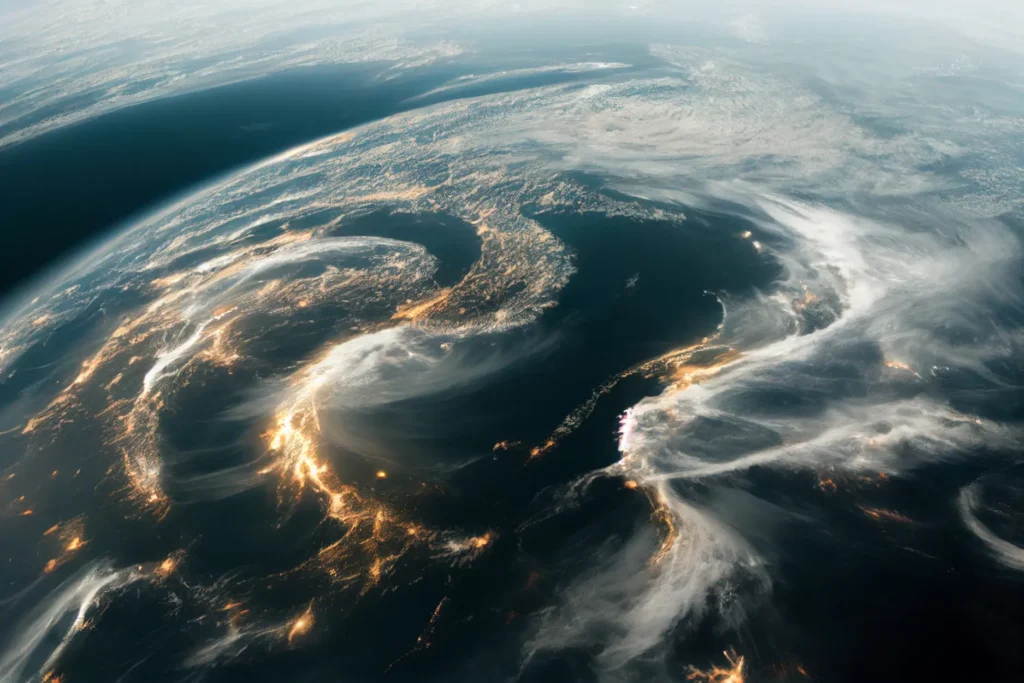
The atmosphere is one of the Earth’s most essential systems, supporting life by providing oxygen, regulating temperature, and protecting humans and ecosystems from harmful solar radiation. However, human activities—especially the burning of fossil fuels, industrial emissions, deforestation, and unsustainable land use—have placed immense pressure on the atmosphere, leading to climate change, air pollution, and damage to the ozone layer. Protecting the atmosphere has therefore become a central theme in international discussions on sustainable development. The 2030 Agenda for Sustainable Development highlights this urgency. Paragraph 31 calls for the widest possible international cooperation to reduce greenhouse gas emissions and help societies adapt to the harmful impacts of climate change. It emphasizes that climate action is not just a national responsibility but a shared global task. Despite this, there remains a significant gap between current national pledges and the level of action required to keep global warming below 2°C—or ideally 1.5°C—above pre-industrial levels. Both the 2030 Agenda and the outcome document “The Future We Want” stress the need for stronger action to close this gap and protect the planet for future generations.
Concerns about the atmosphere were already recognized in earlier global commitments. The Johannesburg Plan of Implementation, adopted in 2002, acknowledged the dangers of climate change and its adverse effects on human well-being, food security, and economic growth. Paragraph 38 of the plan reaffirmed the importance of the United Nations Framework Convention on Climate Change (UNFCCC) and its ultimate objective: stabilizing greenhouse gas concentrations at a safe level to prevent dangerous human interference with the climate system. This goal also includes allowing ecosystems to adapt naturally, protecting agricultural production, and ensuring that development can continue in a sustainable way. The principle of “common but differentiated responsibilities” was emphasized, recognizing that while all countries share responsibility, developed nations with greater historical emissions must take the lead in reducing them.
The Johannesburg Plan also encouraged countries to strengthen scientific observation of the Earth’s atmosphere, land, and oceans. It called for more monitoring stations, increased use of satellite technologies, and the integration of data into global observation systems. This cooperation, often with the support of international organizations and specialized UN agencies, was seen as crucial for producing reliable information that can guide decision-making and track environmental changes.
The protection of the atmosphere has also been discussed extensively by the UN Commission on Sustainable Development (CSD). In 1996, the CSD dedicated an entire session to atmospheric protection, while the 2006 and 2007 sessions addressed related issues such as air pollution, industrial emissions, and sustainable energy systems. These discussions highlighted how deeply connected the atmosphere is to different sectors of human activity, including energy, transportation, agriculture, and industry.
Agenda 21, one of the earliest global sustainability frameworks adopted in 1992, also underscored the importance of atmospheric protection. Chapter 9 of Agenda 21 emphasized that actions to safeguard the atmosphere must be carefully coordinated with economic and social development. The text stressed that climate measures should not hinder the growth and poverty reduction goals of developing countries. Instead, they should be pursued in ways that support sustainable economic progress while reducing environmental harm. This balanced approach reflects the reality that protecting the atmosphere requires integrating environmental action with human development priorities.
Over the years, several international agreements have strengthened efforts to safeguard the atmosphere. These include the 1985 Vienna Convention for the Protection of the Ozone Layer and the 1987 Montreal Protocol, which successfully phased out many ozone-depleting substances. The 1992 UNFCCC and its follow-up agreements remain the cornerstone of global climate action, seeking to unite countries in reducing emissions and building resilience to climate change. Together, these instruments show how international cooperation is essential for managing a global commons like the atmosphere, which transcends borders and affects every nation equally.
Today, protecting the atmosphere remains one of the greatest challenges for sustainable development. It is a complex issue that cuts across multiple areas, from reducing greenhouse gases to addressing urban air pollution, promoting clean energy, improving public health, and safeguarding ecosystems. To be effective, solutions must be collaborative, science-based, and fair—supporting both global climate goals and the right of developing countries to grow and fight poverty.